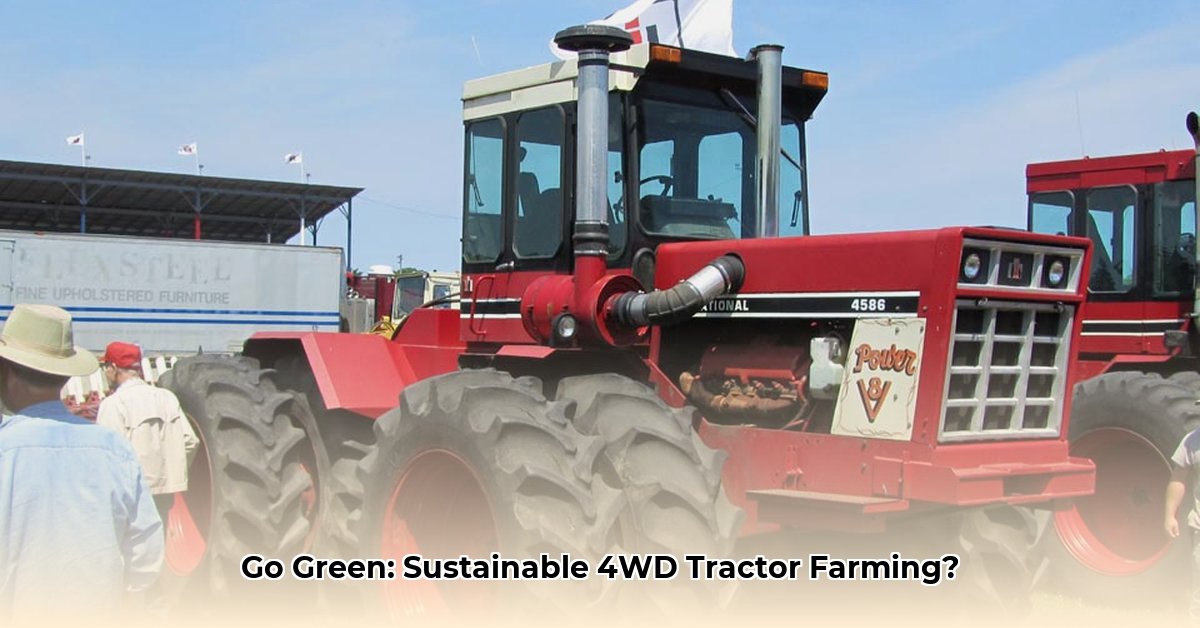
International 4WD Tractor Sustainability: A Practical Guide
The agricultural landscape is evolving, demanding smarter, greener practices. This guide focuses on enhancing the sustainability of International 4WD tractors, emphasizing fuel efficiency and environmental responsibility. We'll explore how modern tractors compare to older models, offer practical maintenance tips, and provide actionable steps for farmers, manufacturers, and policymakers. The ultimate goal is to foster cost savings, environmental protection, and improved farm profitability. For more on green tractor brands, see this helpful resource.
Fuel Efficiency: A Generational Shift
Older International 4WD tractors, exemplified by the powerful but fuel-intensive International Harvester 4166 (175 horsepower, 100-gallon fuel tank), represented a different era of agricultural technology. While these were robust workhorses, their fuel economy and environmental impact were less optimized than modern tractors. Precise fuel consumption data for older models like the 4166 is scarce, hindering direct comparison. However, it's undeniable that contemporary International 4WD tractors boast significantly improved fuel efficiency and advanced pollution control systems, marking a crucial step towards sustainable farming. How can we bridge this generational gap in a manner that benefits both the environment and the bottom line?
How much fuel did the 4166 truly consume per acre? Precise data is hard to obtain for older models, highlighting the need for comprehensive record-keeping and standardized testing for future comparisons.
"The lack of readily available data for older models underscores the importance of robust data collection and standardized testing methods for future generations of tractors," states Dr. Emily Carter, Agricultural Engineering Professor at Purdue University.
Precision Farming: Optimizing Resource Use
Modern farming is shifting from raw horsepower to precision. The objective is to optimize resource utilization, minimizing waste and environmental impact. Precision technologies, which include GPS guidance, automated steering, and variable-rate application, allow farmers to precisely apply fertilizers and pesticides based on real-time needs. While these technologies are increasingly adopted, their adoption rate continues to vary, and research is ongoing to fully assess their long-term environmental impact. Professor Carter notes that "the long-term benefits of precision farming require careful consideration of both environmental and economic factors."
What are the economic and environmental trade-offs associated with implementing precision farming technologies? Further research from independent agricultural institutions is needed to precisely quantify these benefits.
Actionable Steps Toward Sustainable Practices
Sustainable agriculture necessitates a collaborative approach involving farmers, manufacturers, and policymakers. Here’s a breakdown of actionable steps:
For Farmers and Agricultural Businesses:
- Year 1: Analyze current equipment fuel usage and maintenance costs. Explore financing options for more efficient tractors.
- Years 3-5: Upgrade to tractors equipped with precision farming technologies. Consider alternative fuels like biodiesel or renewable diesel. Utilize data analytics for enhanced resource management.
For Equipment Manufacturers:
- Year 1: Increase research and development (R&D) investment in fuel-efficient engines and advanced pollution control systems. Integrate precision farming technologies into new tractor models.
- Years 3-5: Design tractors with inherent sustainability, embracing circular economy principles for parts reuse and recycling.
For Governments and Policy Makers:
- Year 1: Implement policies incentivizing farmers to adopt sustainable practices, offering tax breaks or grants for fuel-efficient tractors and precision farming technologies.
- Years 3-5: Enact stricter emission standards for agricultural equipment. Invest in research on alternative fuels and sustainable farming methods.
Total Cost of Ownership: A Holistic Approach
When evaluating tractors, the initial purchase price is only one factor. Total cost of ownership (TCO) accounts for fuel, maintenance, and repair costs. A comprehensive TCO analysis is essential to determine the long-term sustainability and cost-effectiveness of a tractor investment. Does the initial cost savings of an older model outweigh the long-term higher fuel and maintenance expenses?
“Analyzing total cost of ownership is paramount, considering fuel efficiency in relation to maintenance costs and the lifespan of the tractor,” explains Dr. David Miller, Agricultural Economist at the University of California, Davis.
How to Compare Fuel Efficiency of 4WD Tractors Across Different Generations
Several factors influence a tractor's fuel efficiency:
- Engine Technology: Newer engines have more efficient combustion reducing fuel consumption. Diesel generally offers better fuel efficiency compared to gasoline.
- Engine Size: Smaller engines working within their optimal range are usually more efficient than larger engines operating below capacity.
- Transmission Type: CVTs (Continuously Variable Transmissions) may offer fuel savings compared to conventional transmissions, although their effectiveness depends on the workload.
- 4WD vs. MFWD: 4WD provides superior traction but consumes more fuel than MFWD (Mechanical Front Wheel Drive). The choice depends heavily on the operating conditions.
Steps for Comparison:
- Gather Data: Collect fuel consumption (L/ha or gal/acre) data from manufacturers' specifications.
- Standardize Units: Convert data to a uniform unit for accurate comparison.
- Consider Operating Conditions: Different soil types and tasks affect fuel consumption.
- Account for Maintenance Costs: Higher upfront costs might be offset by lower operational costs over time.
- Factor in Technology: Precision farming technologies significantly reduce fuel use.
The Path Forward: Collaboration for a Sustainable Future
Sustainable agriculture requires collaboration. Farmers need access to efficient equipment; manufacturers must prioritize innovation and environmental responsibility; and governments need to support this transition through supportive policies. The integration of sustainable International 4WD tractors will be instrumental in creating a more sustainable food system for the future. This comprehensive approach to sustainability is vital for the long-term health of our planet and the economic viability of agriculture.